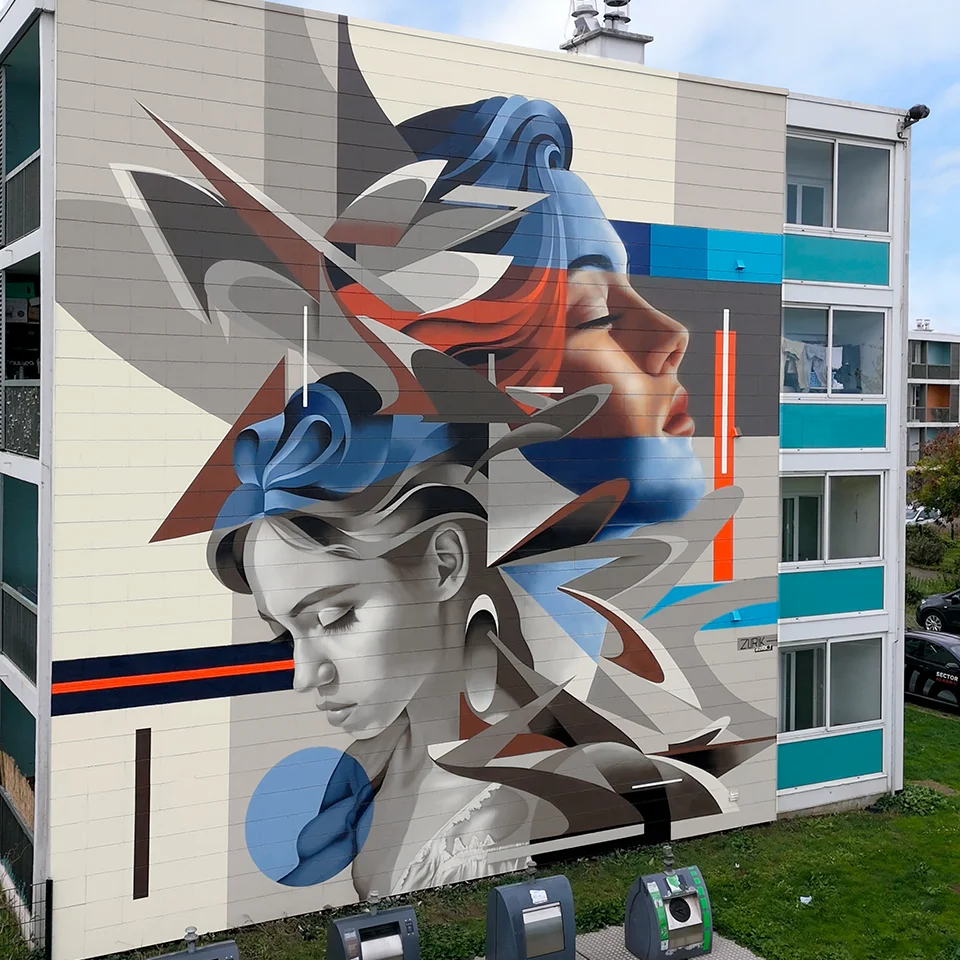
Bringing contemporary art, and specifically graffiti and muralism, closer to younger generations while demonstrating that artistic creation is also a genuine, exciting, and tangible profession—that was the driving force behind my participation in the FlipArt program, an artistic outreach initiative created by the Diputació de Barcelona aimed at students in 3rd and 4th year of ESO (secondary education), Bachillerato, and Vocational Training cycles across educational centers in the province of Barcelona (excluding the city of Barcelona).
It has been an intense and enriching journey that has taken me through numerous secondary schools over the course of an entire academic year, allowing me not only to share my experience but also to gain valuable feedback from students who already possessed varying degrees of familiarity with urban art.
Methodology
Within the program, I had creative freedom to develop a tailored proposal that aligned with my practice. To achieve this, I designed an activity divided into two complementary segments. The objective was not merely to showcase my work, but to help them understand the why and the how behind each piece:
1. A Talk on the Profession and Artistic Trajectory
Initially, during the first hour, the talk began with a comprehensive overview of my professional trajectory. We spoke openly about what it means to pursue art today: my initial steps, my educational background, the importance of self-discipline when working independently, and the medium- and long-term implications of dedicating oneself to mural painting and building a solo career. We also explored the search for an authentic visual language, practical technical challenges, and creative project management. This initial part helped dispel stereotypes, fostered honest dialogue, and demonstrated that every project entails countless hours of research, trial, and error.
2. The Hands-On Workshop: Letter Construction from Shapes
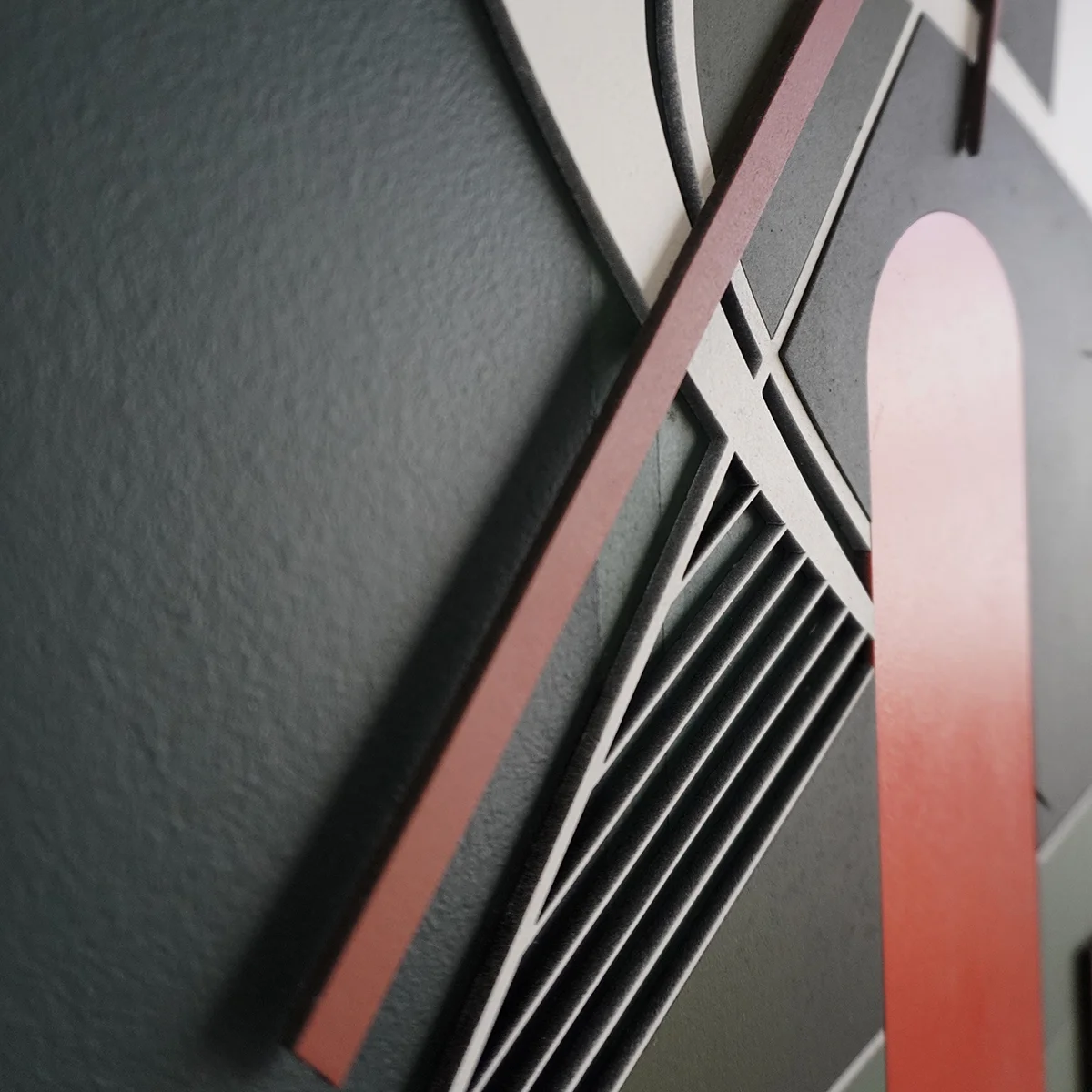
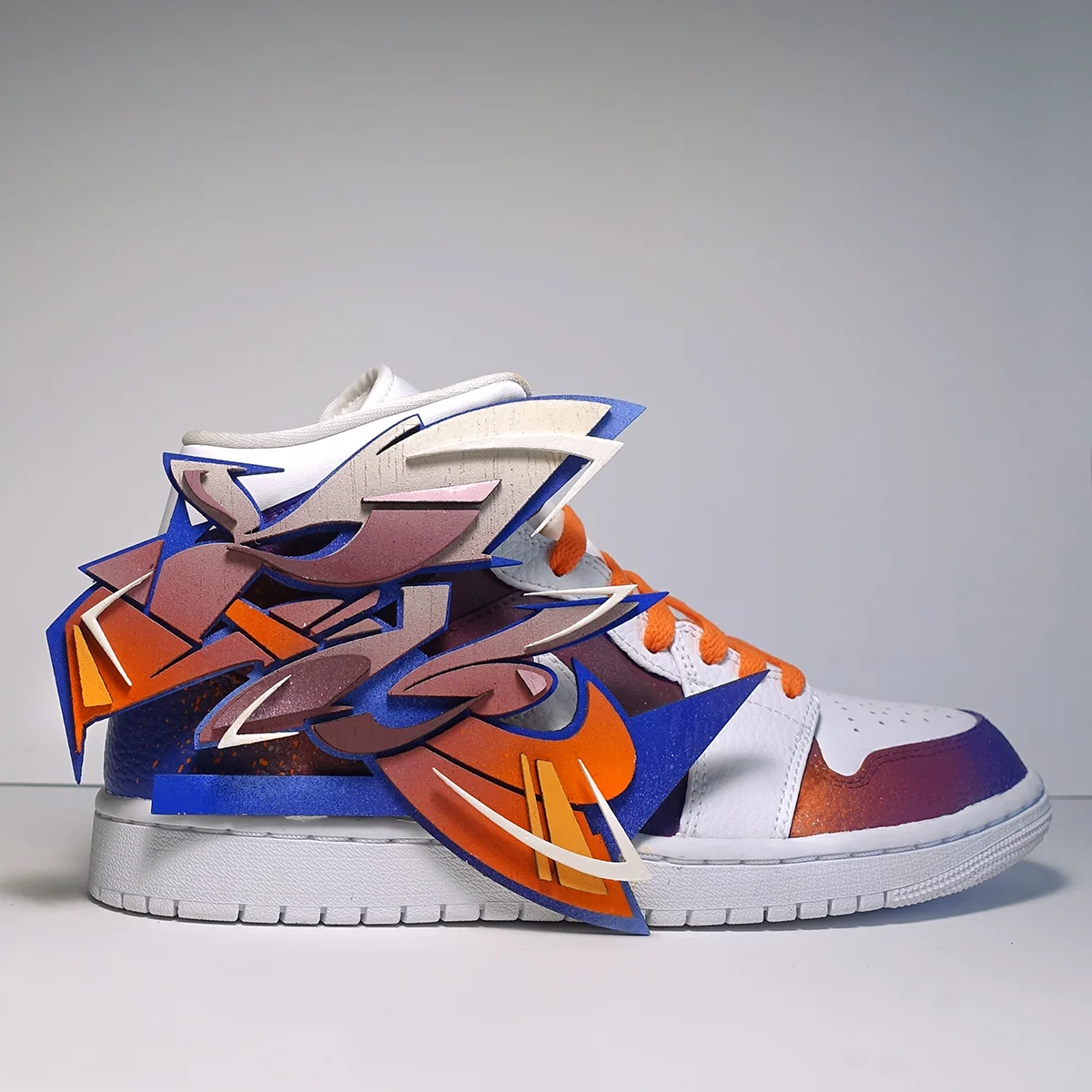
Following the talk, it was time to move into practice. I wanted students to experience my creative process firsthand. To achieve this, I brought my studio workflow into the classroom using a set of pre-cut cardstock shapes that I designed and prepared in my studio.
Using these modular pieces—derived directly from the way I construct my own lettering rather than from standard geometric shapes—the challenge for each group of students was to explore space and assemble their own letters, guided by guidelines to build volume through color and small wooden pieces to create height.
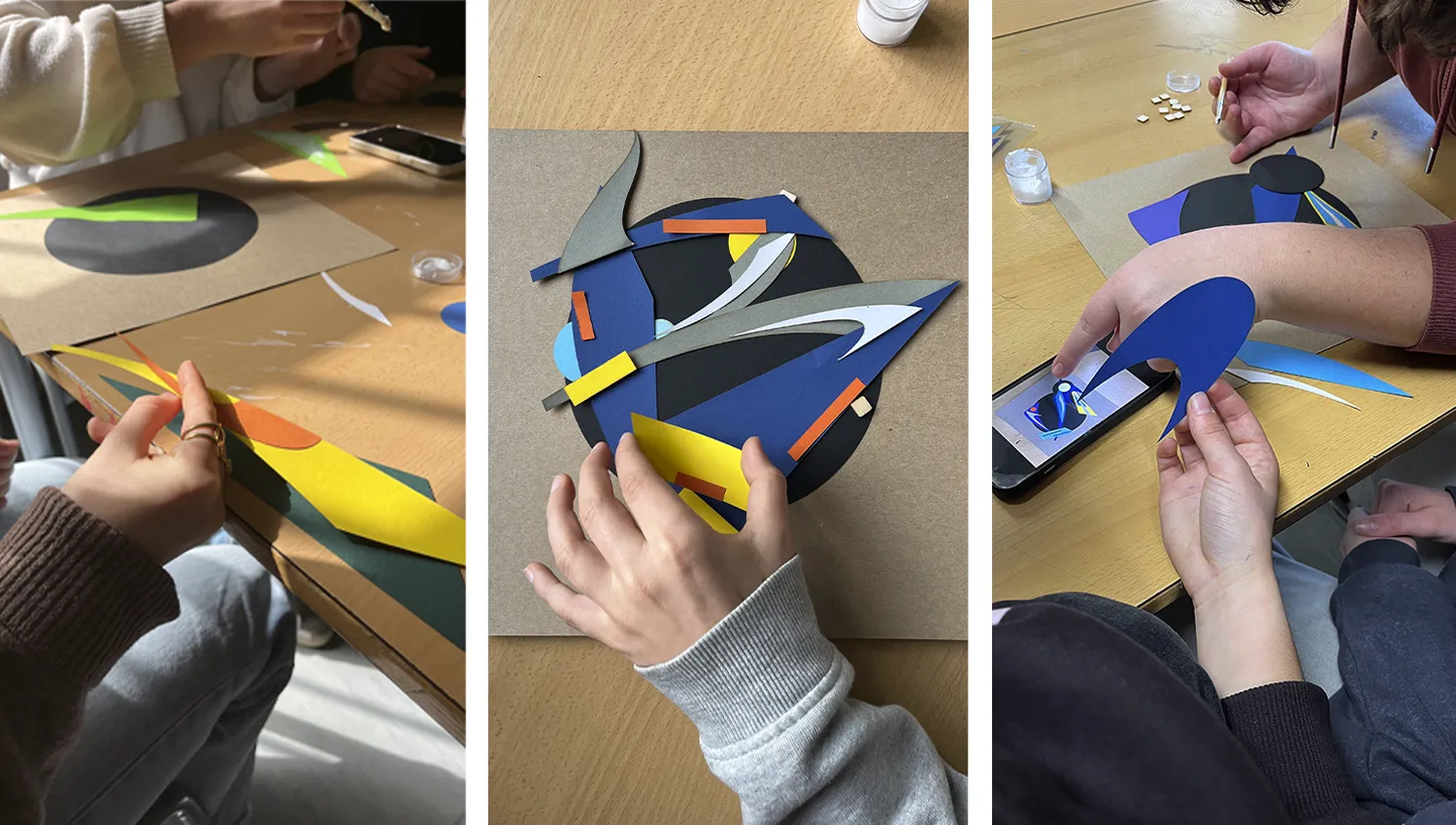
This approach made it possible to address key concepts in a highly intuitive way:
- Formal synthesis: Understanding how a complex structure (such as typography) can be broken down into fundamental elements.
- Spatial awareness and volume: Moving from the two-dimensional plane of a written letter to a three-dimensional form.
- Fearless creativity: Working from pre-cut components eliminated the fear of the “blank canvas,” allowing students to focus entirely on experimenting, exploring combinations, and arriving at their own aesthetic solutions.
Reflections After Visiting Multiple Schools
Visiting more than 18 educational institutions across Catalonia left me with one certainty: when provided with real tools and treated as capable creators, young people respond with remarkable curiosity and talent.
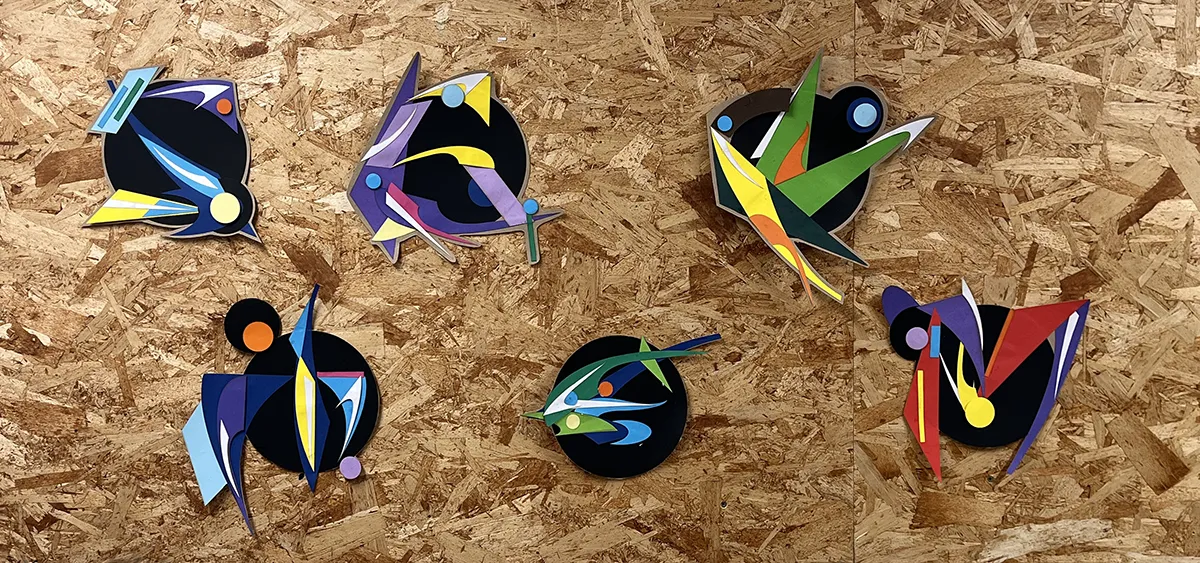
Witnessing how identical sets of pre-cut pieces (even with color and shape variations) generated hundreds of completely distinct letters—some more architectural, others more organic or experimental—was the most rewarding aspect of this journey.
I am deeply grateful to the team behind the FlipArt program, to the educators who welcomed me into their classrooms, and above all, to every student who actively engaged in bringing their own ideas to life. Thank you for providing this platform to share years of professional experience in ways that may guide and inspire future creators.