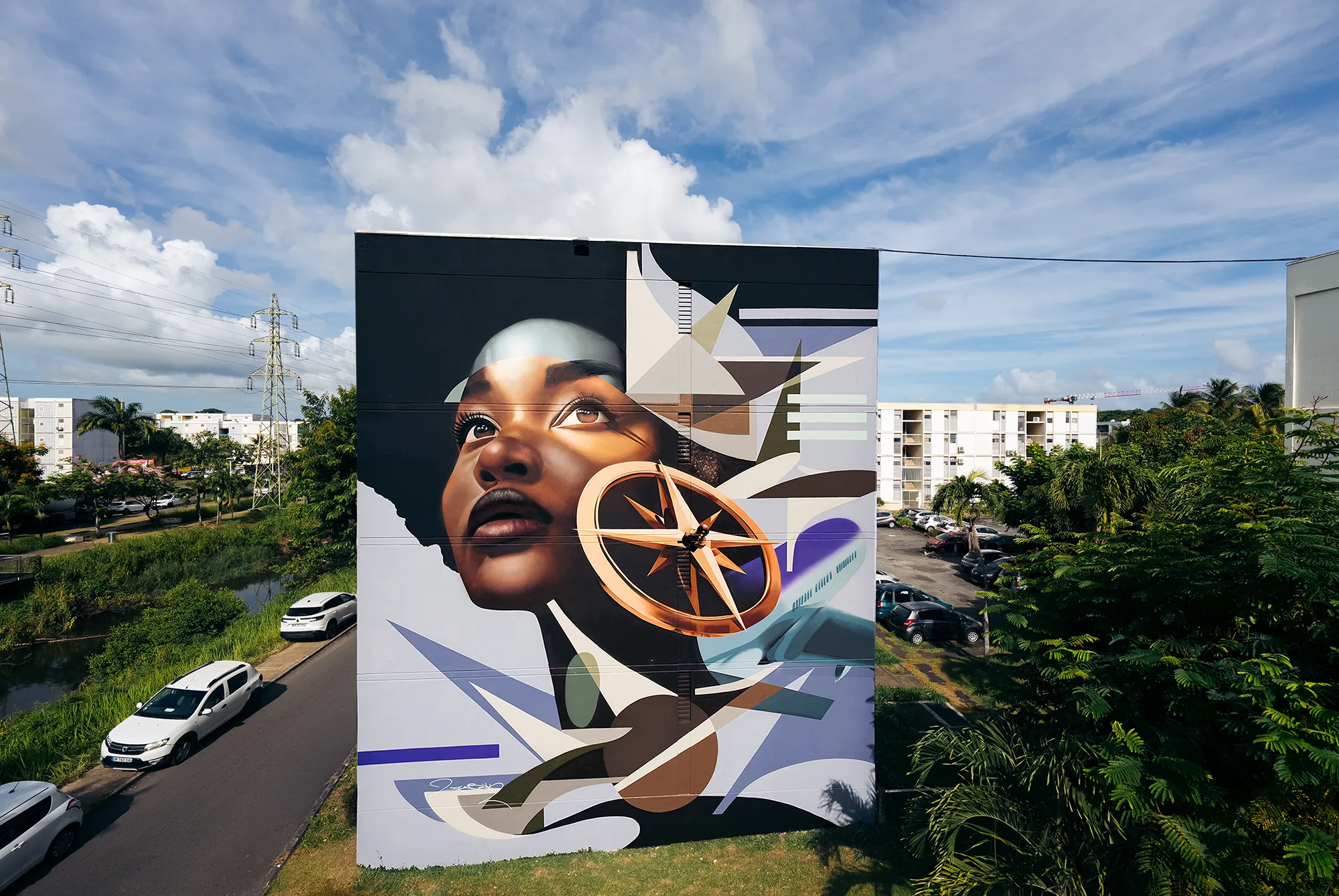
In mid-May, I had the opportunity to return to the island of Guadeloupe in the French Antilles for the Walfest Festival, organized by the Wad Al Lub (WAL) association in collaboration with the Société Immobilière de Guadeloupe (SIG).
The festival, composed of murals, music, and workshops for the community, took place in the emblematic neighborhood of LE RAIZET, lasting 9 days and featuring the participation of numerous artists.
HOW LONG DID THE CREATION TAKE?
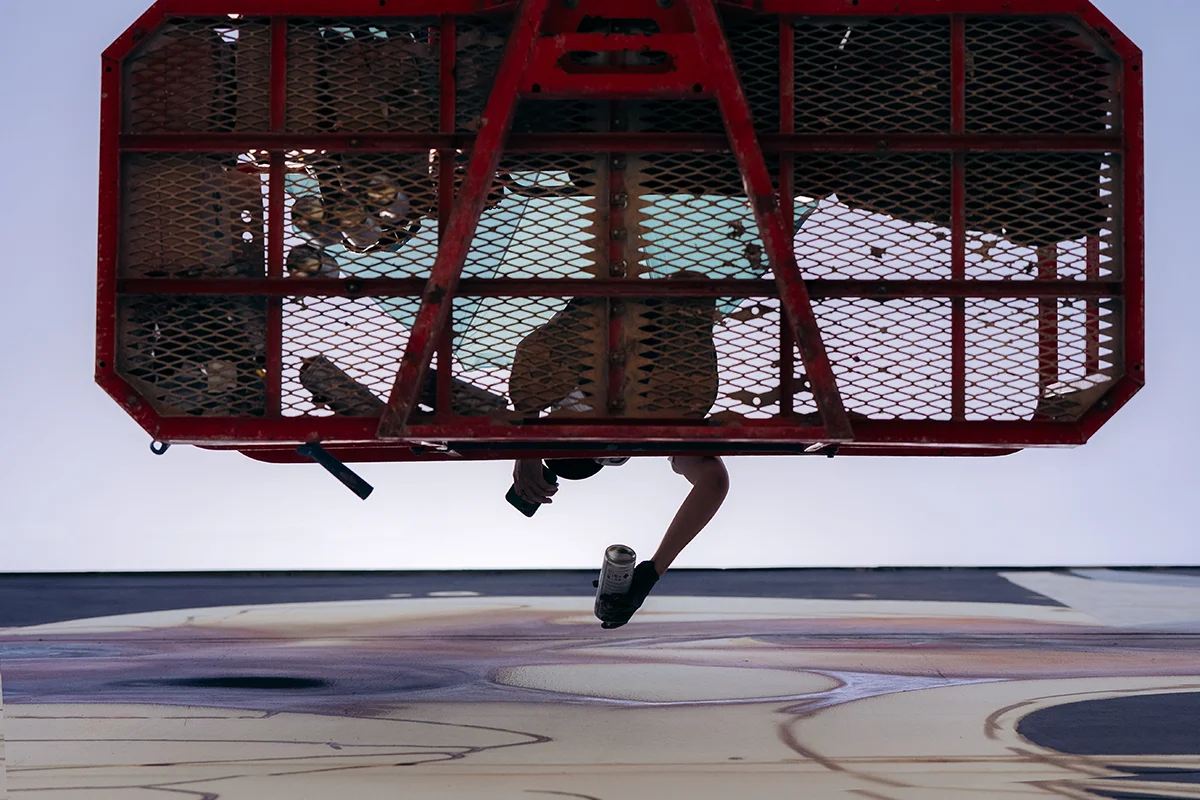
In total, I spent 5 days working full-time; although the festival lasted 9 days, I wasn’t able to arrive for the start, which is why I had to work longer days to make up for lost time.
ABOUT THE PROCESS
On the first day, after marking out the drawing, I usually divide the work by planes from back to front, starting with the background. I dedicate the second day to the face and usually focus first on the right eye, then the left, nose, cheeks, and finally the mouth, chin, and forehead, respectively. If there are objects, I continue with them and finally focus on the letters. I rarely deviate much from the original sketch, but when finishing the wall, I pay special attention to the lines with accent colors (in this case, the stronger purple in the lower-left corner) and make sure they work with the overall composition and color; if not, I usually change the color or add it in other spaces.
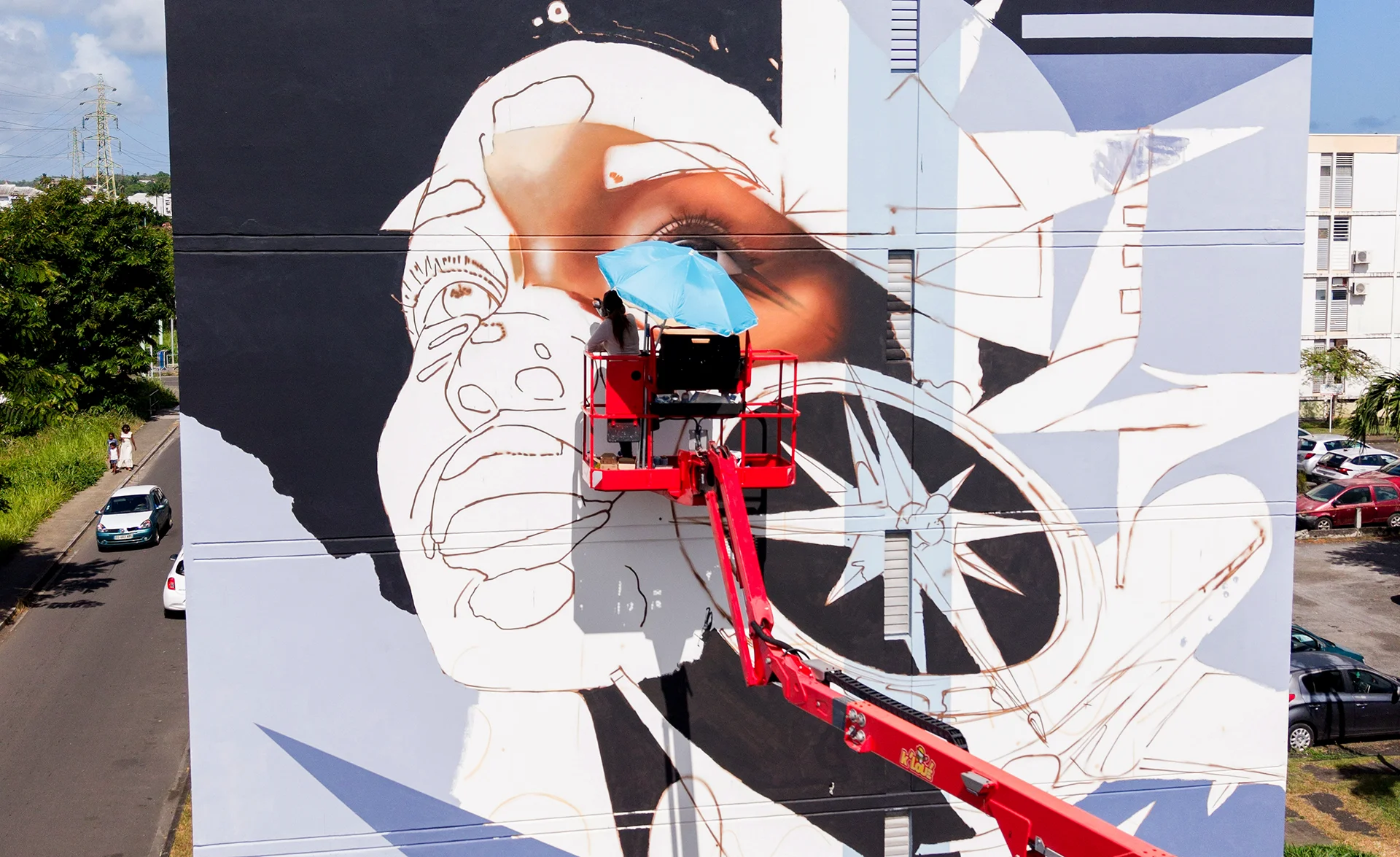
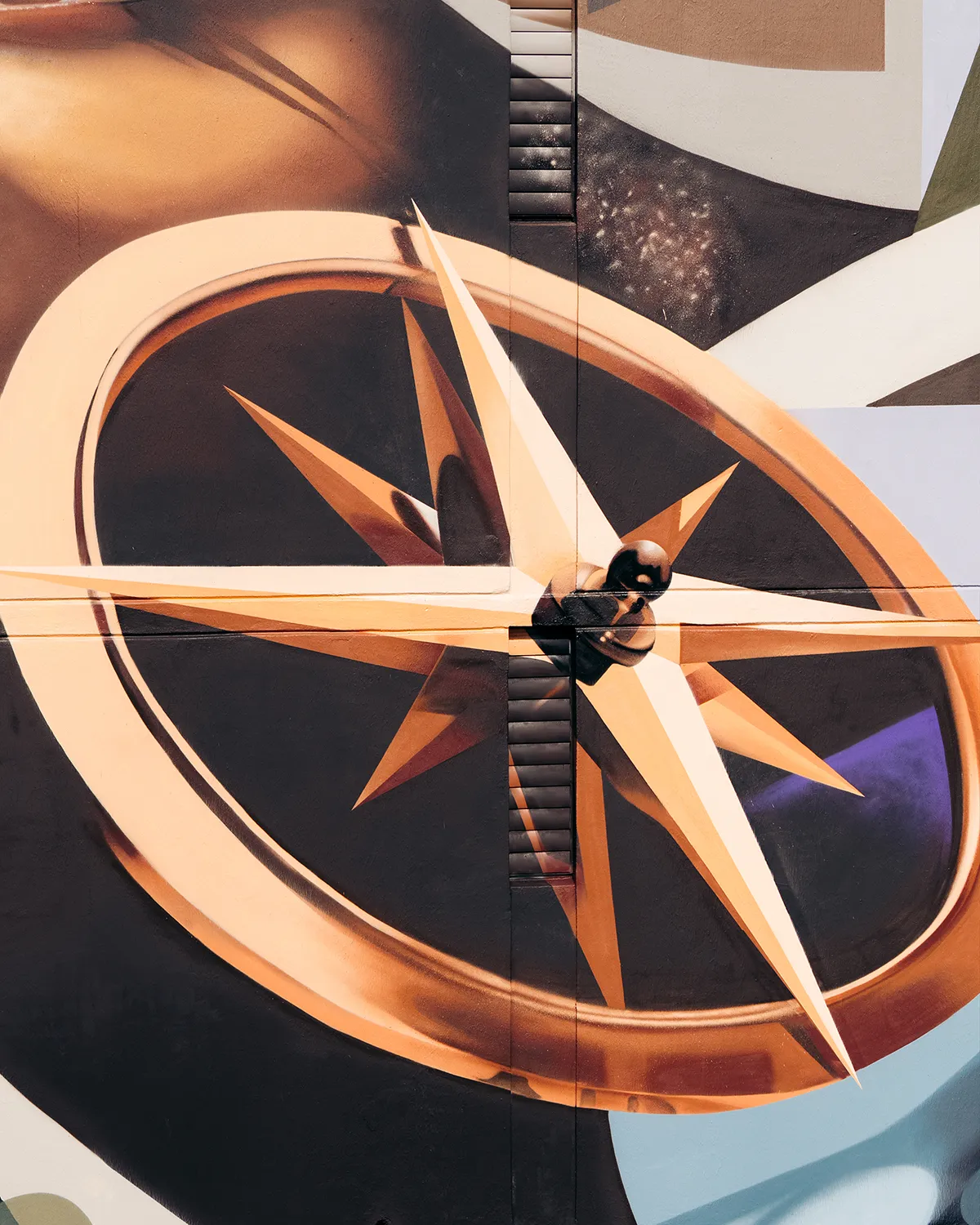
For the execution, I used acrylic paint extensively for the background and some of the large flat surfaces, such as the hair and the medium violet that functions as a displaced shadow of some elements. The face, the airplane, the letters, and the compass rose were done entirely with spray paint; the vast majority of colors were mixed (mixing within the spray itself) to achieve the desired tones; for example, for the compass rose, I added pink to the entire range of orange and brown colors to give that copper appearance. The blue tones of the airplane are the result of adding medium blue to gray tones, and the letters are a combination of browns, warm grays, ochres, and whites with additions of green, yellow, and orange in some of them. In the photograph, it is somewhat difficult to perceive, but even in the darkest color (which is not pure black) there are two tones, one dark chocolate (neck and lower part of the mural) and the other dark blue (hair).
WHAT DOES IT REPRESENT?
The mural pays homage to the first Guadeloupe airport, inaugurated in 1953 and originally called Pointe-à-Pitre Le Raizet. For me, traveling outside our usual environment opens the mind to new experiences, new opportunities, and new ways of understanding the world, while connecting us with the realities of many other people who build lives different from ours, thus fostering tolerance and understanding. Travel broadens horizons, and that is why the mural includes not only the airplane but also a compass rose, which symbolizes the different paths we can take in our lives when we allow ourselves to explore beyond our environment.